
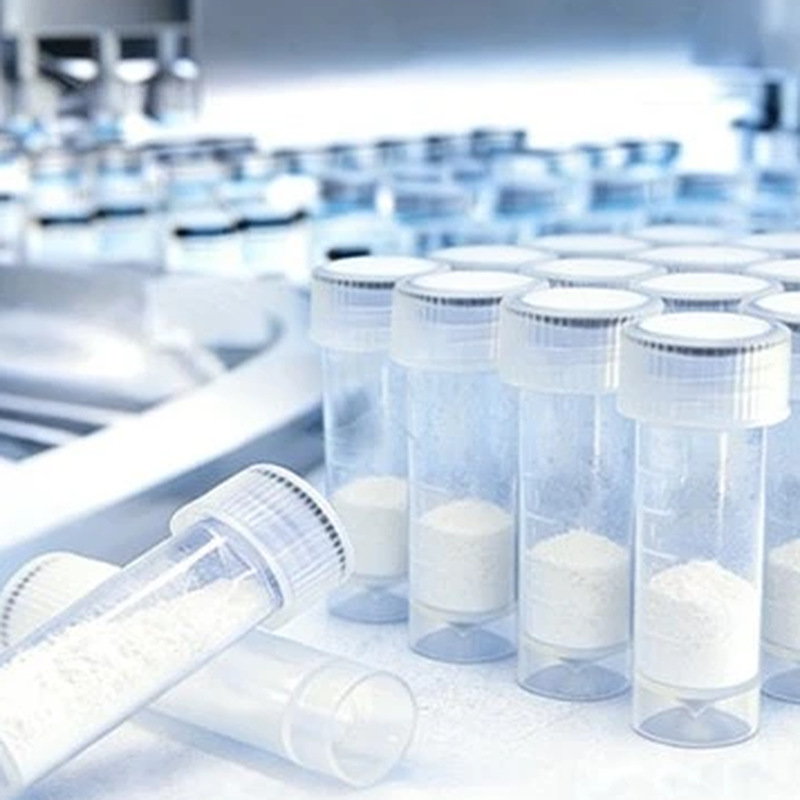
A cosmetic peptide is a short chain of amino acids supplied as a raw material for a finished formulation, not as a finished product. In purchasing terms it is defined less by a marketing claim than by five checkable fields: sequence identity, assay method, physical form, solubility behaviour and the batch document set that records them.
What counts as a peptide ingredient
Chains are usually described by length (di-, tri-, hexapeptide), by a modification such as acetyl, palmitoyl or biotinoyl, or by complexation with a metal ion such as copper. Two ingredients sharing a base sequence can behave very differently once a fatty acid or a copper ion is attached, so the name on a quotation is only the starting point.
Five fields to read before a sample request
Ask for the sequence or INCI name, the physical form (lyophilised powder or aqueous premix), the appearance, the assay method behind any purity figure, and the document list available for that grade. If a quotation states a percentage without naming the method, that number is not yet comparable with another quotation.
Powder, premix or custom sequence
A single lyophilised powder gives a formulator full control over ratios. A pre-dispersed premix reduces the number of weighings of low-inclusion actives. A custom sequence is a project with its own specification, identity confirmation and documentation scope. These are three different purchasing routes, not three price points for the same item.
What a specification sheet cannot tell you
A specification describes the raw material, not your finished base. Solubility in pure water says little about behaviour in a serum containing electrolytes, a preservative system and a fixed pH window. Plan a small compatibility panel in the real base before committing to a bulk quantity.
Tell us the target application, dosage form and destination market and we will send the matching specification sheet and a sample proposal for evaluation in your own system.