
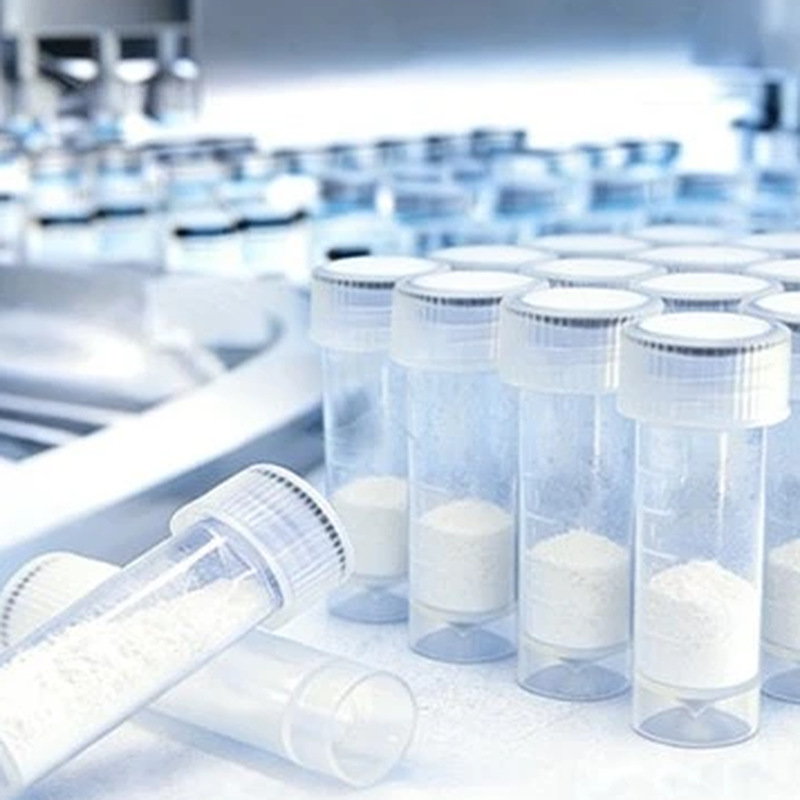
A shelf-life line on a specification is a conditional statement, not a universal property of the molecule. It assumes a defined pack, a defined temperature and humidity range, and an unopened container. Change any of those and the statement needs reviewing.
Moisture is usually the first variable
Lyophilised powders are hygroscopic to varying degrees. Each opening of a container in a humid room introduces water, and water changes the mass you weigh as well as stability. Karl Fischer or an equivalent water determination on the batch COA is more useful than an assumption that the powder is dry.
Light, temperature cycling and oxygen
Copper-complexed peptides and other coloured actives can be light-sensitive; amber glass and opaque secondary packaging are common controls. Repeated warming and cooling during transport or a busy production fridge causes condensation inside the pack. Ask what temperature excursions the grade has been evaluated against, and whether a shipped temperature log is available.
After reconstitution the clock changes
Once a peptide is in aqueous solution, hydrolysis, aggregation and microbial growth become relevant on a much shorter timescale than dry storage. A preservative system, pH and container headspace all matter. Re-assay after storage rather than assuming the initial charge survived; this is the same check we recommend for solubility and clarity in a finished base.
Practical receiving checks
On receipt, confirm the seal, the batch number against the COA, the storage conditions stated on the TDS and any temperature indicator. Log the opening date, and re-test water content and assay if a part-used pack will be held for a long period.
Ask us for the storage and handling section of the TDS for the grade you are evaluating, and tell us the destination climate so the recommended pack format matches the route.